Courses
I have worked with excellent strength & conditioning coaches treating athletes, but never one specializing so well in rock climbing. I am thrilled with Tyler’s work in developing objective strength assessments. Tyler’s clinical practitioner background helps to bridge strength & conditioning with rehab. Tyler’s course has added to my clinical practice.
-Nina Tappin, Physiotherapist, RPT, BSCPT, ACPSEM
Upcoming Live Courses
Note: If you’re a gym or a business looking to collaborate on an event, course, or training, reach out here.

Upper Extremity Rehab 4 Climbers
A 2-Day Continuing Education Course for Healthcare Providers
Upper Extremity Rehab 4 Climbers is a two-day, in-person course designed for healthcare professionals who work with rock climbers and want a clearer, more systematic approach to injury assessment, diagnosis, prognosis, and rehabilitation.
This course is built for clinicians—physicians, physical therapists, chiropractors, and massage therapists—who already treat musculoskeletal injuries, but want a deeper sport-specific context for climbing. The goal is to help clinicians understand how climbing loads the upper extremity, how common climbing injuries actually present, and how rehabilitation and training modifications can be structured logically and reasonably.
Rock climbing places unusually high and repetitive demands on the shoulder, elbow, wrist, and fingers. Many of the injuries seen in climbers do not fit neatly into traditional orthopedic models, and outcomes often suffer when climbing biomechanics, grip positions, training structure, and exposure history are poorly understood. This course is designed to close that gap.
Course Objectives
By the end of this course, participants will be able to:
Understand climbing-specific biomechanics and how they influence tissue loading and injury risk.
Identify the most common upper extremity injuries in climbers, including their typical mechanisms, clinical presentation, and expected timelines.
Use functional testing (force production, rate of force development, and capacity) to guide rehabilitation and return-to-climb decisions.
Modify climbing and training plans appropriately, rather than relying solely on rest or generic exercise prescriptions.
Critically evaluate the role of patient education, passive interventions, splinting/bracing, and imaging within a climbing population.
Decide when advanced imaging is appropriate, and how imaging findings should (and should not) influence management.
Course Structure
This is a didactic + applied course, with classroom-based teaching paired with hands-on assessment, testing, and programming discussions.
Day 1 — Shoulder & Elbow
Morning (Didactic Focus)
Injury incidence and epidemiology in climbers
Shoulder pathology in climbing
Rotator cuff pathology
Labral involvement
Biceps-related pain
Overuse vs traumatic mechanisms
Elbow pathology in climbing
Tennis, Golfers, and Climbers elbow
Joint-related pathology
The role of climbing biomechanics, grip type, and arm position
Intake questionnaires and clinical interviewing for climbers
Utility and limitations of orthopedic special tests
Afternoon (Applied Focus)
Functional testing for climbers
Force production
Rate of force development (RFD)
Capacity and fatigue tolerance
Translating test results into rehabilitation decisions
Training and climbing regressions during injury
Progression strategies that respect tissue adaptation and exposure history
Case examples and practical decision-making frameworks
Day 2 — Wrist & Fingers
Morning (Didactic Focus)
Wrist pathology in climbing
TFCC injuries
Capsulitis and ligamentous stress
Tendinopathies and load-related pain
Finger injury patterns in climbers
Pulley injuries
Capsulitis and synovitis
Tendon-related pathology
Physeal stress injuries (youth considerations)
Wrist–finger interaction and load transfer
When splinting or bracing is appropriate, and when it is not
Evidence-based discussion of passive interventions
Indications for imaging and interpretation pitfalls
Afternoon (Applied Focus)
Finger-specific functional testing
Load management strategies for finger injuries
Rehabilitation progressions for grip-specific demands
Return-to-climb decision-making
Integrating rehab with ongoing climbing and strength training
Case walkthroughs from intake to return to performance
Teaching Philosophy
This course emphasizes critical thinking over protocols.
Rather than prescribing one “correct” exercise or progression, the focus is on understanding:
Why an injury developed
What tissues are being stressed
How climbing and training variables can be modified
When regression and progression is appropriate
Current literature is used throughout the course. Not as rigid rules, but as a framework for better clinical reasoning. Areas of uncertainty, limitations of existing research, and common clinical misconceptions are discussed openly.
Who This Course Is For
Healthcare providers currently treating climbers
Clinicians interested in working with climbing populations
Providers frustrated by poor outcomes using generic upper extremity rehab models
Professionals who want a clearer, more defensible approach to managing climbing injuries
Course Details
Location: Private clinic. Verona, Italy
Date: November 28-29, 2026
Available Tickets: 20
If you are a healthcare provider who treats climbers, Upper Extremity Rehab 4 Climbers is designed to walk you through the process of listening, understanding, educating, testing, and programming for the most common upper extremity injuries seen in the sport.
Upper Extremity Rehab 4 Climbers
A 2-Day Continuing Education Course for Healthcare Providers
Upper Extremity Rehab 4 Climbers is a two-day, in-person course designed for healthcare professionals who work with rock climbers and want a clearer, more systematic approach to injury assessment, diagnosis, prognosis, and rehabilitation.
This course is built for clinicians—physicians, physical therapists, chiropractors, and massage therapists—who already treat musculoskeletal injuries, but want a deeper sport-specific context for climbing. The goal is to help clinicians understand how climbing loads the upper extremity, how common climbing injuries actually present, and how rehabilitation and training modifications can be structured logically and reasonably.
Rock climbing places unusually high and repetitive demands on the shoulder, elbow, wrist, and fingers. Many of the injuries seen in climbers do not fit neatly into traditional orthopedic models, and outcomes often suffer when climbing biomechanics, grip positions, training structure, and exposure history are poorly understood. This course is designed to close that gap.
Course Objectives
By the end of this course, participants will be able to:
Understand climbing-specific biomechanics and how they influence tissue loading and injury risk.
Identify the most common upper extremity injuries in climbers, including their typical mechanisms, clinical presentation, and expected timelines.
Use functional testing (force production, rate of force development, and capacity) to guide rehabilitation and return-to-climb decisions.
Modify climbing and training plans appropriately, rather than relying solely on rest or generic exercise prescriptions.
Critically evaluate the role of patient education, passive interventions, splinting/bracing, and imaging within a climbing population.
Decide when advanced imaging is appropriate, and how imaging findings should (and should not) influence management.
Course Structure
This is a didactic + applied course, with classroom-based teaching paired with hands-on assessment, testing, and programming discussions.
Day 1 — Shoulder & Elbow
Morning (Didactic Focus)
Injury incidence and epidemiology in climbers
Shoulder pathology in climbing
Rotator cuff pathology
Labral involvement
Biceps-related pain
Overuse vs traumatic mechanisms
Elbow pathology in climbing
Tennis, Golfers, and Climbers elbow
Joint-related pathology
The role of climbing biomechanics, grip type, and arm position
Intake questionnaires and clinical interviewing for climbers
Utility and limitations of orthopedic special tests
Afternoon (Applied Focus)
Functional testing for climbers
Force production
Rate of force development (RFD)
Capacity and fatigue tolerance
Translating test results into rehabilitation decisions
Training and climbing regressions during injury
Progression strategies that respect tissue adaptation and exposure history
Case examples and practical decision-making frameworks
Day 2 — Wrist & Fingers
Morning (Didactic Focus)
Wrist pathology in climbing
TFCC injuries
Capsulitis and ligamentous stress
Tendinopathies and load-related pain
Finger injury patterns in climbers
Pulley injuries
Capsulitis and synovitis
Tendon-related pathology
Physeal stress injuries (youth considerations)
Wrist–finger interaction and load transfer
When splinting or bracing is appropriate, and when it is not
Evidence-based discussion of passive interventions
Indications for imaging and interpretation pitfalls
Afternoon (Applied Focus)
Finger-specific functional testing
Load management strategies for finger injuries
Rehabilitation progressions for grip-specific demands
Return-to-climb decision-making
Integrating rehab with ongoing climbing and strength training
Case walkthroughs from intake to return to performance
Teaching Philosophy
This course emphasizes critical thinking over protocols.
Rather than prescribing one “correct” exercise or progression, the focus is on understanding:
Why an injury developed
What tissues are being stressed
How climbing and training variables can be modified
When regression and progression is appropriate
Current literature is used throughout the course. Not as rigid rules, but as a framework for better clinical reasoning. Areas of uncertainty, limitations of existing research, and common clinical misconceptions are discussed openly.
Who This Course Is For
Healthcare providers currently treating climbers
Clinicians interested in working with climbing populations
Providers frustrated by poor outcomes using generic upper extremity rehab models
Professionals who want a clearer, more defensible approach to managing climbing injuries
Course Details
Location: Mile End Climbing Wall, London, UK
Date: March 6-7, 2027
Available Tickets: 20
If you are a healthcare provider who treats climbers, Upper Extremity Rehab 4 Climbers is designed to walk you through the process of listening, understanding, educating, testing, and programming for the most common upper extremity injuries seen in the sport.
Upper Extremity Rehab 4 Climbers
A 2-Day Continuing Education Course for Healthcare Providers
Upper Extremity Rehab 4 Climbers is a two-day, in-person course designed for healthcare professionals who work with rock climbers and want a clearer, more systematic approach to injury assessment, diagnosis, prognosis, and rehabilitation.
This course is built for clinicians—physicians, physical therapists, chiropractors, and massage therapists—who already treat musculoskeletal injuries, but want a deeper sport-specific context for climbing. The goal is to help clinicians understand how climbing loads the upper extremity, how common climbing injuries actually present, and how rehabilitation and training modifications can be structured logically and reasonably.
Rock climbing places unusually high and repetitive demands on the shoulder, elbow, wrist, and fingers. Many of the injuries seen in climbers do not fit neatly into traditional orthopedic models, and outcomes often suffer when climbing biomechanics, grip positions, training structure, and exposure history are poorly understood. This course is designed to close that gap.
Course Objectives
By the end of this course, participants will be able to:
Understand climbing-specific biomechanics and how they influence tissue loading and injury risk.
Identify the most common upper extremity injuries in climbers, including their typical mechanisms, clinical presentation, and expected timelines.
Use functional testing (force production, rate of force development, and capacity) to guide rehabilitation and return-to-climb decisions.
Modify climbing and training plans appropriately, rather than relying solely on rest or generic exercise prescriptions.
Critically evaluate the role of patient education, passive interventions, splinting/bracing, and imaging within a climbing population.
Decide when advanced imaging is appropriate, and how imaging findings should (and should not) influence management.
Course Structure
This is a didactic + applied course, with classroom-based teaching paired with hands-on assessment, testing, and programming discussions.
Day 1 — Shoulder & Elbow
Morning (Didactic Focus)
Injury incidence and epidemiology in climbers
Shoulder pathology in climbing
Rotator cuff pathology
Labral involvement
Biceps-related pain
Overuse vs traumatic mechanisms
Elbow pathology in climbing
Tennis, Golfers, and Climbers elbow
Joint-related pathology
The role of climbing biomechanics, grip type, and arm position
Intake questionnaires and clinical interviewing for climbers
Utility and limitations of orthopedic special tests
Afternoon (Applied Focus)
Functional testing for climbers
Force production
Rate of force development (RFD)
Capacity and fatigue tolerance
Translating test results into rehabilitation decisions
Training and climbing regressions during injury
Progression strategies that respect tissue adaptation and exposure history
Case examples and practical decision-making frameworks
Day 2 — Wrist & Fingers
Morning (Didactic Focus)
Wrist pathology in climbing
TFCC injuries
Capsulitis and ligamentous stress
Tendinopathies and load-related pain
Finger injury patterns in climbers
Pulley injuries
Capsulitis and synovitis
Tendon-related pathology
Physeal stress injuries (youth considerations)
Wrist–finger interaction and load transfer
When splinting or bracing is appropriate, and when it is not
Evidence-based discussion of passive interventions
Indications for imaging and interpretation pitfalls
Afternoon (Applied Focus)
Finger-specific functional testing
Load management strategies for finger injuries
Rehabilitation progressions for grip-specific demands
Return-to-climb decision-making
Integrating rehab with ongoing climbing and strength training
Case walkthroughs from intake to return to performance
Teaching Philosophy
This course emphasizes critical thinking over protocols.
Rather than prescribing one “correct” exercise or progression, the focus is on understanding:
Why an injury developed
What tissues are being stressed
How climbing and training variables can be modified
When regression and progression is appropriate
Current literature is used throughout the course. Not as rigid rules, but as a framework for better clinical reasoning. Areas of uncertainty, limitations of existing research, and common clinical misconceptions are discussed openly.
Who This Course Is For
Healthcare providers currently treating climbers
Clinicians interested in working with climbing populations
Providers frustrated by poor outcomes using generic upper extremity rehab models
Professionals who want a clearer, more defensible approach to managing climbing injuries
Course Details
Location: Vita Beta, Quarry Bay, Hong Kong
Date: January 16-77, 2027
Available Tickets: 20
If you are a healthcare provider who treats climbers, Upper Extremity Rehab 4 Climbers is designed to guide you through the process of listening, understanding, educating, testing, and programming for the most common upper-extremity injuries seen in the sport.
Upper Extremity Rehab 4 Climbers
A 2-Day Continuing Education Course for Healthcare Providers
Upper Extremity Rehab 4 Climbers is a two-day, in-person course designed for healthcare professionals who work with rock climbers and want a clearer, more systematic approach to injury assessment, diagnosis, prognosis, and rehabilitation.
This course is built for clinicians—physicians, physical therapists, chiropractors, and massage therapists—who already treat musculoskeletal injuries, but want a deeper sport-specific context for climbing. The goal is to help clinicians understand how climbing loads the upper extremity, how common climbing injuries actually present, and how rehabilitation and training modifications can be structured logically and reasonably.
Rock climbing places unusually high and repetitive demands on the shoulder, elbow, wrist, and fingers. Many of the injuries seen in climbers do not fit neatly into traditional orthopedic models, and outcomes often suffer when climbing biomechanics, grip positions, training structure, and exposure history are poorly understood. This course is designed to close that gap.
Course Objectives
By the end of this course, participants will be able to:
Understand climbing-specific biomechanics and how they influence tissue loading and injury risk.
Identify the most common upper extremity injuries in climbers, including their typical mechanisms, clinical presentation, and expected timelines.
Use functional testing (force production, rate of force development, and capacity) to guide rehabilitation and return-to-climb decisions.
Modify climbing and training plans appropriately, rather than relying solely on rest or generic exercise prescriptions.
Critically evaluate the role of patient education, passive interventions, splinting/bracing, and imaging within a climbing population.
Decide when advanced imaging is appropriate, and how imaging findings should (and should not) influence management.
Course Structure
This is a didactic + applied course, with classroom-based teaching paired with hands-on assessment, testing, and programming discussions.
Day 1 — Shoulder & Elbow
Morning (Didactic Focus)
Injury incidence and epidemiology in climbers
Shoulder pathology in climbing
Rotator cuff pathology
Labral involvement
Biceps-related pain
Overuse vs traumatic mechanisms
Elbow pathology in climbing
Tennis, Golfers, and Climbers elbow
Joint-related pathology
The role of climbing biomechanics, grip type, and arm position
Intake questionnaires and clinical interviewing for climbers
Utility and limitations of orthopedic special tests
Afternoon (Applied Focus)
Functional testing for climbers
Force production
Rate of force development (RFD)
Capacity and fatigue tolerance
Translating test results into rehabilitation decisions
Training and climbing regressions during injury
Progression strategies that respect tissue adaptation and exposure history
Case examples and practical decision-making frameworks
Day 2 — Wrist & Fingers
Morning (Didactic Focus)
Wrist pathology in climbing
TFCC injuries
Capsulitis and ligamentous stress
Tendinopathies and load-related pain
Finger injury patterns in climbers
Pulley injuries
Capsulitis and synovitis
Tendon-related pathology
Physeal stress injuries (youth considerations)
Wrist–finger interaction and load transfer
When splinting or bracing is appropriate, and when it is not
Evidence-based discussion of passive interventions
Indications for imaging and interpretation pitfalls
Afternoon (Applied Focus)
Finger-specific functional testing
Load management strategies for finger injuries
Rehabilitation progressions for grip-specific demands
Return-to-climb decision-making
Integrating rehab with ongoing climbing and strength training
Case walkthroughs from intake to return to performance
Teaching Philosophy
This course emphasizes critical thinking over protocols.
Rather than prescribing one “correct” exercise or progression, the focus is on understanding:
Why an injury developed
What tissues are being stressed
How climbing and training variables can be modified
When regression and progression is appropriate
Current literature is used throughout the course. Not as rigid rules, but as a framework for better clinical reasoning. Areas of uncertainty, limitations of existing research, and common clinical misconceptions are discussed openly.
Who This Course Is For
Healthcare providers currently treating climbers
Clinicians interested in working with climbing populations
Providers frustrated by poor outcomes using generic upper extremity rehab models
Professionals who want a clearer, more defensible approach to managing climbing injuries
Course Details
Location: Awesome Walls, Dublin Ireland
Date: March 12-13, 2027
Available Tickets: 20
If you are a healthcare provider who treats climbers, Upper Extremity Rehab 4 Climbers is designed to guide you through the process of listening, understanding, educating, testing, and programming for the most common upper-extremity injuries seen in the sport.
In Person Certification Courses
(What is the certification course? Click here to learn more!)

Recorded Courses

Climbing / Rehab Performance Testing – Evidence-Based, Practical, and Evolving
There’s more information than ever on how to test a climber’s physiology—but the most recent scientific reviews agree: there are more reliable methods than others. This course cuts through the noise and gives you the most up-to-date, practical recommendations for assessing climbing physiology based on current research and field-tested methods.
What You’ll Learn:
In this recorded, live Zoom course, we’ll walk you through how to build a comprehensive testing system for climbers using modern tools like the Tindeq Progressor, Vitruve Encoder, and NNOXX muscle oxygen sensors.
You’ll need access to:
A Tindeq Progressor or similar strain gauge (e.g., ForceBoard)
A no-hang edge or device that can be mounted overhead and on the floor
(Optional) Vitruvefit encoder and NNOXX SmO₂ monitor for additional data tracking
Key Topics Covered:
🔹 Maximum Strength Testing
Learn how to distinguish between yielding vs. overcoming isometrics
Understand what force discrepancies mean in practice
Explore expected adaptations from each type
Review scientific findings, practical tools, and how to implement them into training
🔹 Rate of Force Development (RFD) & Power Testing
Break down the difference between RFD and power output
What separates elite climbers from beginners, physiologically?
How quickly should athletes access a percentage of their max?
Use Tindeq + Vitruvefit to assess and improve this performance domain
🔹 Finger Endurance Profiling
Understand the difference between anaerobic power, anaerobic capacity, and critical force
Use SmO₂ data and strain gauges to test and train specific endurance qualities off-the-wall
📅 Course Details
Date: August 2, 2025
Time: 8:00–11:00 AM MST
Format: Live Zoom session (recorded for later access)
This course is designed for climbing coaches, rehabilitation professionals, and serious athletes seeking to gain a deeper understanding of how to effectively test what matters, track genuine progress, and train more effectively.
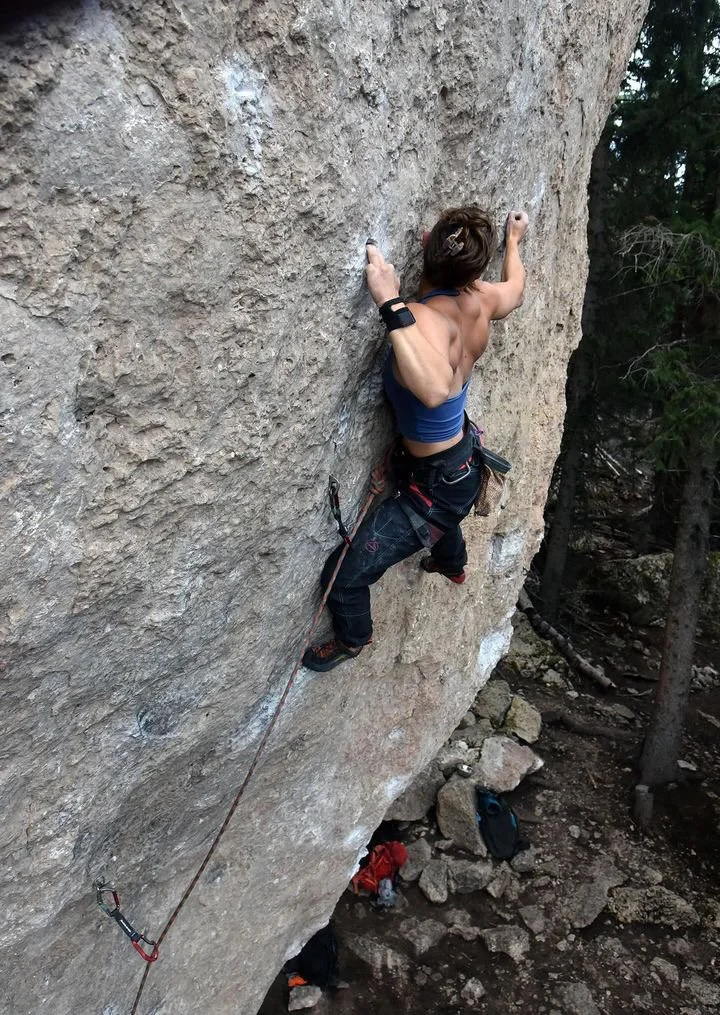
Finger Training Methodologies and Progressions for Rock Climbers
Description:
This two-day online course is designed for climbers, coaches, and therapists who want to understand the current science of finger training program design. As a follow-up to the Upper Extremity/Finger Testing Course, this advanced training dives into the research and practical applications of effective finger training strategies.
The course will be online from 8am - 11:00am Mountain Standard Time. It will also be recorded, so you can watch it after if you’re unable to make the live event for any reason.
The first day of the course focuses on reviewing key research on finger testing and training, covering topics such as strength assessment, rate of force development, capacity testing, and energy system utilization. The second day transitions into programming applications, where participants will learn how to design and implement individualized finger training plans based on the scientific principles discussed on Day 1.
This course blends cutting-edge research with hands-on programming strategies, giving participants the tools and confidence to create effective training plans for themselves or their clients.
Key Topics Covered:
Day 1: Research on Finger Testing & Training
Finger Testing Research
Assessing peak force, rate of force development, and capacity
Understanding energy system contributions to finger strength and endurance
Finger Training Research
Methods for developing force production, endurance, and resilience
Key studies on isometric, eccentric, and concentric finger training
Research-backed insights into training adaptations and recovery
Day 2: Finger Training Programming & Application
Programming Examples and Progressions
How to build effective finger training programs
Tailored approaches for different climbers and goals
Strategies for integrating finger training into a broader climbing regimen
Styles of Periodization in Finger Training
Linear periodization
Nonlinear/undulating periodization
Block periodization
Hybrid models for advanced customization
Finger Training Methods and Tools
No-hangs, block lifts, and unlevel edges
Circular objects and on-the-wall coordination drills
Campus board training options and climbing-specific practices
Modern Training Technologies
Blood flow restriction (BFR) for strength and endurance gains
SMO₂ monitoring for real-time physiological insights
Velocity-based training to measure and develop power
Developing Finger Physiology
Peak force training
Impulse and power generation
Anaerobic and aerobic capacity
Format and Schedule:
Dates: Saturday & Sunday
Duration: 3–4 hours each day
Format: Live online sessions
Participant Limit: 20 attendees for an interactive and personalized learning experience
A recorded version of the course will be available after the live sessions for those who cannot attend in real time or wish to review the material.
Who Should Attend?
This course is ideal for:
Climbers who want to design their training programs
Coaches looking to refine their programming expertise for athletes
Therapists interested in incorporating finger-specific training into rehabilitation and performance plans
Key Benefits:
By the end of this course, participants will:
✅ Understand the latest research on finger testing and training methodologies
✅ Learn how to assess and interpret finger strength and capacity metrics
✅ Gain step-by-step progressions for developing finger strength, power, and endurance
✅ Confidently design and adjust training programs for individual needs
✅ Discover how to integrate advanced tools like BFR and SMO₂ monitoring into programming
This course provides a unique blend of scientific knowledge and practical application, ensuring participants understand the why and how behind effective finger training strategies.
🔹 Spots are limited to 20 participants to ensure an interactive learning experience. Register now to secure your place!
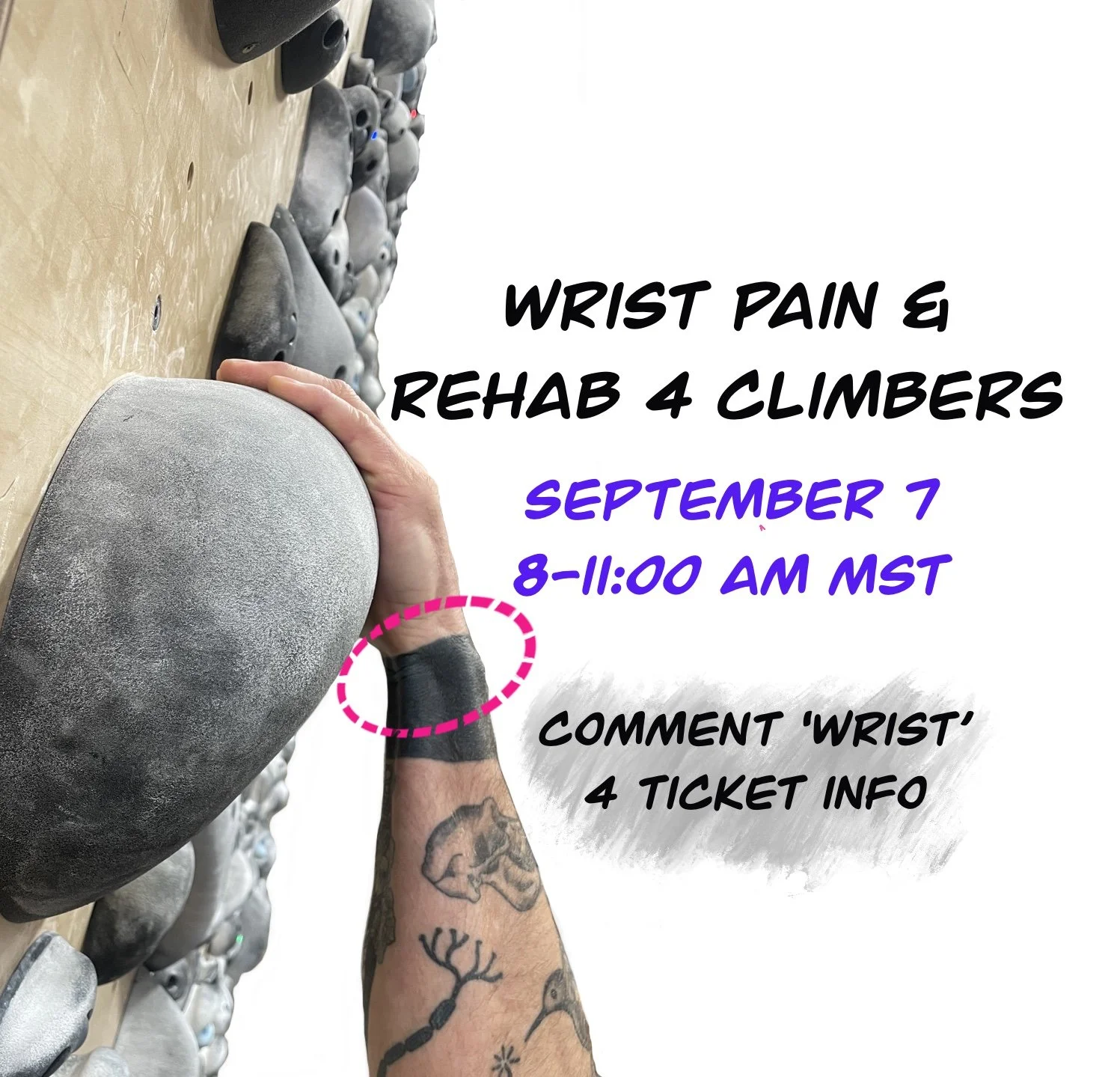
Wrist Injuries in Climbers: Diagnosis, Management, and Referral Strategies
A 4-hour course recording for climbing coaches and healthcare providers
Format: Recorded course access via Google Drive
Course Overview
Rock climbing places unique and repetitive demands on the wrist, yet most climbers, coaches, and clinicians lack a structured approach to identifying, treating, and managing wrist injuries. This three-hour live course is designed specifically for climbing coaches, physical therapists, chiropractors, and other healthcare professionals who work with climbers and want to improve their understanding of wrist pathology.
This course will combine biomechanics, orthopedic testing, diagnostic reasoning, and conservative treatment strategies. Participants will leave with the tools to confidently assess wrist injuries, manage them conservatively, and know when to refer out.
What You'll Learn
Functional anatomy and biomechanics of the wrist in climbing
Mechanisms of injury in different grip types and movement patterns
How to perform orthopedic special tests for ulnar- and radial-sided wrist pain
How to differentiate soft tissue from osseous pathology
Imaging guidelines: when to refer for X-ray, MRI, CT, or ultrasound
Principles of conservative management and tissue-specific loading
Return-to-climb timelines and indicators
Referral decision-making based on pathology and severity
Pathologies Covered
This course will provide detailed anatomical, biomechanical, diagnostic, and management information for the following 17 wrist pathologies commonly seen in climbers:
Triangular Fibrocartilage Complex (TFCC) Injury
Distal Radioulnar Joint (DRUJ) Instability
Ulnotriquetral Ligament Tear
Ulnar Impaction Syndrome
Midcarpal Instability
Triquetral Impingement Syndrome
Extensor Carpi Ulnaris (ECU) Tendon Injury / Subluxation
Synovitis of the Ulnocarpal Recess
De Quervain’s Tenosynovitis
Intersection Syndrome
Scapholunate Ligament Injury / Instability (DISI)
Hook of Hamate Stress Fracture
Bone Marrow Edema Syndromes
Wrist Ganglion Cyst
Distal Radius Physeal Stress Injury (Youth Climbers)
Extensor Pollicis Longus (EPL) Tendon Rupture
Flexor Pollicis Longus (FPL) Tendon Rupture
Included With Registration
Live, interactive 3-hour session via Google Meet
Full recording of the course for replay
Downloadable slides, diagnostic flowcharts, and reference guides
Access to case-based examples and future updates
Q&A time with Tyler
How It Works
After registering, you’ll receive:
A confirmation email with the Google Meet link
Pre-course materials for review
Access to the course recording and all downloadable resources after the event
Register now to access the course.

This three-hour course is designed to teach participants about finger injury risk(s) and a comprehensive approach to prevention. We will discuss the literature on the most common finger injuries by location and incidence, theorized mechanisms in rock climbing training, and generalized (not just rock climbing) methods for management. This course will focus on the hand and finger.
Due to the diversity of participants (athletes, coaches, and healthcare providers), this course is not exclusive to healthcare providers, but it will discuss diagnostic testing, imaging, and clinical management. This course aims to educate participants about what to be aware of in the fingers and how to mitigate the risk as much as possible.
This is a recording from June 2025.
Please send an email to Tyler at camp4performance@gmail.com with any questions.
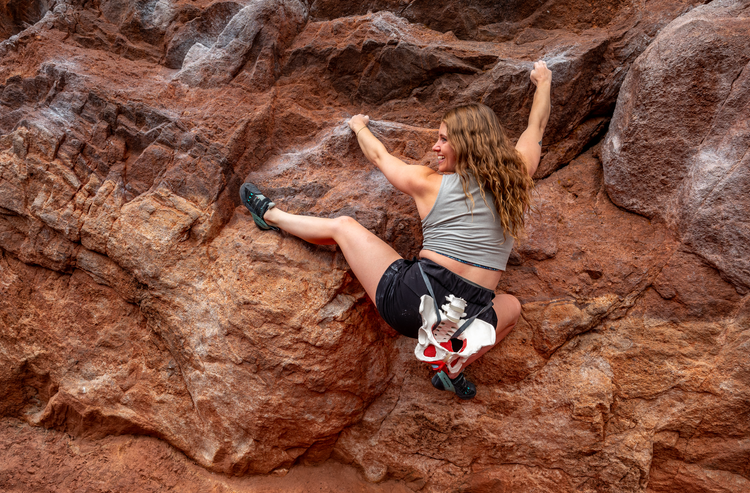
This course is designed for athletes and coaches who want to train smarter by working with the menstrual cycle rather than against it. You'll learn how to track how your body is feeling, adapt training strategies, and manage symptoms—so athletes can keep progressing toward their goals while honoring their body's needs.
What You'll Learn:
Menstrual Cycle Fundamentals – Understanding the follicular and luteal phases, ovulation, and hormonal changes.
Training Adjustments – How to modify strength, endurance, and recovery based on how you feel
Symptom Management – Strategies for handling fatigue, cramps, mood shifts, and RED-S risks.
Long-Term Athletic Success – Tools for tracking cycles, preventing overuse, and training sustainably.
Whether you're a coach or athlete, this course provides a science-backed, individualized approach to optimizing performance while respecting the body’s natural rhythms. By aligning training with how you are feeling, athletes can improve recovery, and maintain long-term progress toward their goals.
This is a 40 minute video course plus a PDF for tracking your cycle. You will get a PDF linking to both resources upon purchase. Make sure you open the link provided in your receipt email within 24 hours to save the link.

Every climber understands the importance of training the fingers for climbing. But most are doing it ineffectively by overloading the fingers in only one way. This 4.5-hour online course dives deep into the science of training the fingers and hand. To do this, we need to use climbing and non-climbing research to address the following topics.
-The physiology of the hand (muscles, nerves, joints, variations).
-Recent research in climbing
-Adaptations to strength training
-Adaptations to power training
-Active vs. passive tension
-Types of fatigue with training
-How biomechanics influence exercise choice
-Understanding specificity and individualization
-Practical applications
This course was delivered remotely, and the recording is available upon purchase. If you're a coach or athlete interested in learning the most up-to-date exercise science methodologies for training, this course is for you.
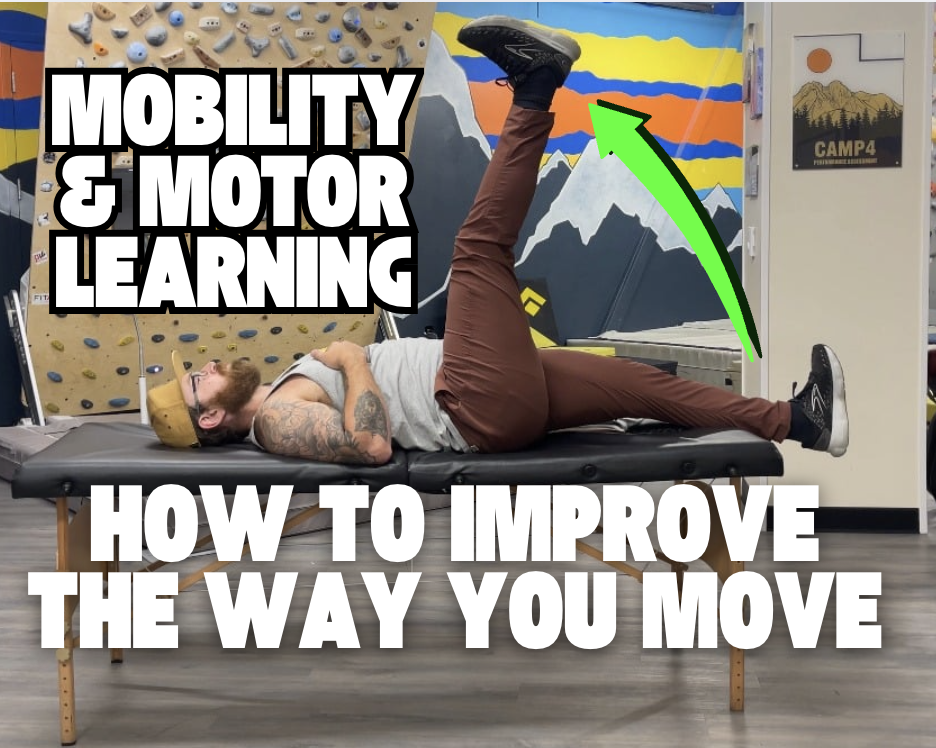
In this recorded course, participants will learn all about human movement and how we can better assess our individual capacities and compare them to the demands of climbing!
This course will detail:
The clarification between “flexibility” and “mobility”
How to assess the physical demands of climbing generally, and individually to your own projects or style of climbing.
How you can assess yourself physically to clarify your own training needs
What training for better flexibility and mobility looks like and what you can do to improve the way you move.
Exactly what “End Range Strength Training” looks and feels like and where it can go in your training programs!

If you’re a coach, parent, or athlete looking for more detailed information on training youth athletes, this course is for you.
This course was recorded through a zoom meeting room and is 3-hours in length. Participants will get access to the course material immediately after purchase.
The course breakdown is as follows.
Section 1 (30-min): Defining youth (biological vs. emotional maturity).
Section 2 (30-min): Youth climbing injury risk.
--
Section 3 (30-min): Difference between muscles, tendon, and bone.
Section 4 (30-min): Understanding the demands of our sport and how to identify the needs (testing) of the individual.
--
Section 5 (30-min): Programming for youth athletes (when and why).
Section 6 (30-min): Injury risk reduction/management.

Learn about the specifics of the shoulder and how it pertains to your training during this 3-hour online recording. This course is an in-depth analysis of anatomy, biomechanics, and research on optimally training the shoulder for sports performance. This is a “no b.s.” course that will use the current science to teach you what matters and what likely is a waste of your time with training. In the first section, we will discuss the hardware of the shoulder (bones, muscles, and ligaments). The second section will discuss your software (nervous system and motor control theory). In the final section, we will discuss training and how to build a robust shoulder girdle.
The supplemental material for this course will consist of exercise templates and a video library to ensure you understand how to train the shoulder specifically for climbing. If you’re curious about how to train the shoulder comprehensively, this course is for you. Once you purchase the course, you will get access to a google drive with the course recordings and supplemental material. Feel free to watch it as many times as you’d like!
On the date and time listed in the course title, we will host a live Q&A on the course. This is the time for you to bring any questions about the material. Each participant will be emailed a zoom link before the listed time.

This 2+ hour course is designed to teach participants about tendon pain and rehabilitation. What does your pain mean, the most common underlying causes, and whether you should continue training or not? There is a substantial body of evidence suggesting that athletes should modify sports participation, not discontinue it entirely.
What really matters is the type of load, its magnitude/velocity, and the volume that athletes need to modify. During this recorded course we will discuss the histology (what your tissues are made of) of connective tissue, how that connective responds to different types of muscle contractions, and the most accepted methods for rehabilitating your aches and pains. For the most part these concepts apply to many joints, tendons, and ligaments in the body. The application of rehab principles is what this course is all about.
The clinical example we discuss in this course is medial elbow pain, or golfer’s elbow. Once you purchase the course you will be provided access to a google drive with the course recording and supplemental material. Feel free to watch is as many times as you’d like! If you have any trouble getting access email Dr. Nelson directly at camp4performance@gmail.com.

This eight-week (16-hour) musculoskeletal anatomy course is designed to give coaches confidence in prescribing exercise. If you’re a coach or therapist looking to sharpen your anatomic knowledge, this course is for you.
During our live course we discussed the following:
-Relevant bony landmarks (where muscles attach).
-Individual joints and their morphology/range of motion.
-Upper extremity, lower extremity, and axial muscles.
-Exercise prescription, rehab, andprogramming.
In this course we cover it all, with a big emphasis on forearm and finger anatomy.
There are no prerequisites for this course. This is the recording of a class delivered through zoom over eight-weeks. Each week I provided supplemental material for participants to work on before the lecture. This “homework”, which includes my strength training for climbers ebook, is included in the cost of the course.
Because anatomy is all Latin terminology, It requires a ton of exposure. The more you hear it, talk about it, and struggle with it, the more you will remember. Due to the online nature of this recording, you can set the course schedule that works best for you.
Once you purchase the course you will be given access to the google drive which hosts the material. Then you can access the material at your leisure.
For any questions about the course send Dr. Nelson an email at camp4performance@gmail.com
See the live course schedule below.
Lecture 1 - Joint / bone anatomy (upper extremity/spine)
Lecture 2 - Joint / bone anatomy (hand / finger)
Lecture 3 - Muscular anatomy (upper extremity / spine)
Lecture 4 - Joint / bone anatomy (lower extremity/spine)
Lecture 5 - Muscular anatomy (lower extremity/spine)
Lecture 6 - Exercise applications part 1 (research)
Lecture 7 - Exercise applications part 2 (research)
Lecture 8 - Finger training interventions / periodization overview
Here is what a few participants said about the course:
“Tyler is a wealth of knowledge and understands how to convey lots of information while remaining approachable and funny. Very few resources for this knowledge exist at this level of specificity and depth in the climbing community.”
- Jesse Firestone (climbing coach)
“I've taken many courses from Tyler and they never fall short of my expectations. The anatomy course was no exception. Tyler has an ability to explain the nuances of human anatomy in an easily digestible manner. To top it off, he has a breath of knowledge regarding exercise science and his ability to relate it to climbing makes this course greatly beneficial to all climbers.”
-Tim Hogan Massage Therapist
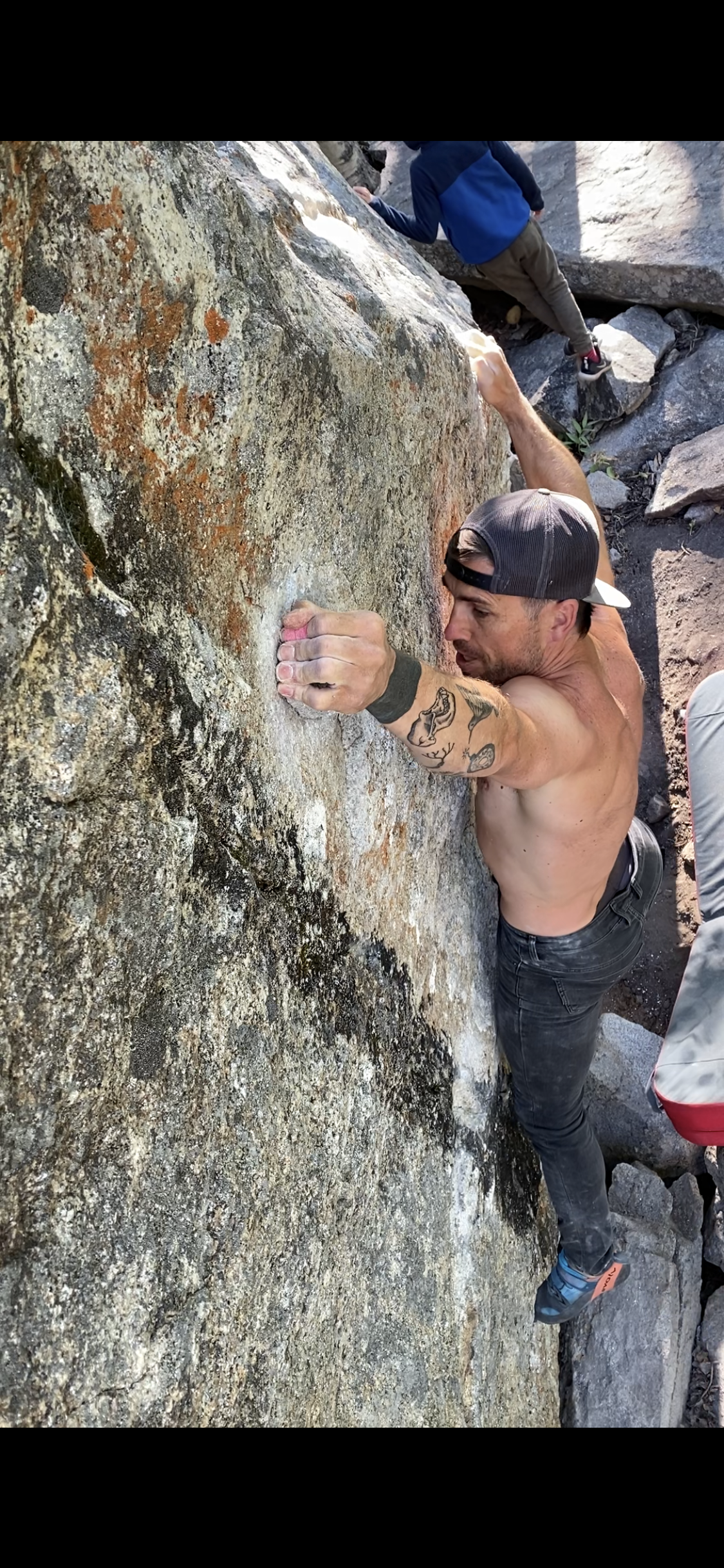
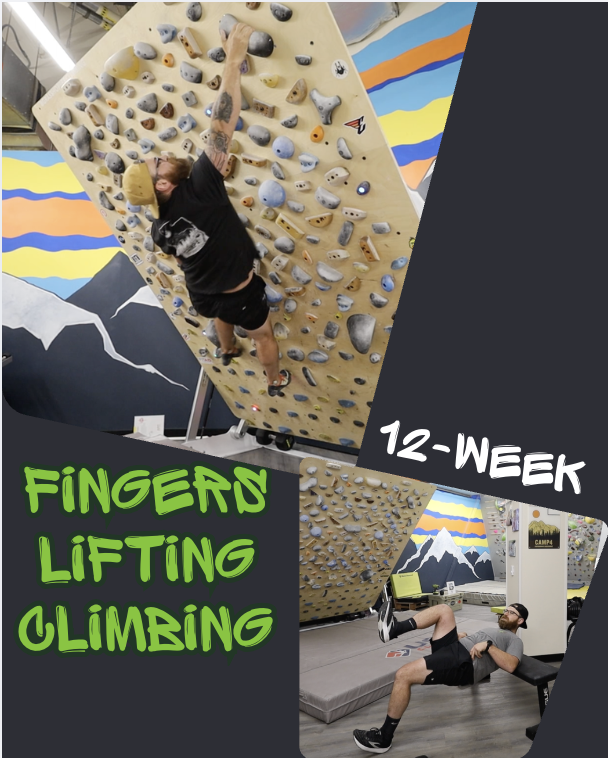
This is a recorded version of my two-day clinic discussing strength and conditioning principles and their application to the climbing athlete. The goal is to equip each participant (coach or athlete) with knowledge on how to use these principles to better program for themselves or their clients. This course is 8-hours of material and has been certified for CEU’s through both the NSCA and NASM.
The course is broken down into 4 sections. Each has their own video recording(s) and supplemental notes for you to review and study.
Part 1: The basics of exercise physiology. What are muscle fibre types and how are they different? What is the difference between your muscles and their connective tissue? Why do we care about the sliding filament theory of contraction and how we use energy? How to consider mechanical leverage at specific joints of the body, and muscle bio-energetics. These are a few of the important topics of this section.
Part 2: Demands, Needs, and Testing. This section breaks down how to think about the physiologic demands of our sport (demands analysis). The goal is to teach you to analyze the tasks (times under tension, move number, wall pitch, velocity etc.) of climbing. This allows the coach to be more specific with testing, and thus identify the needs of the individual. This section is all about how we can better assess climbers.
Part 3: Training methodology. There are many methods used to train athletes. This section is designed to teach coaches the many options for training strength, power, and capacity. We also dive into the theories of periodization and how we can track and manipulate performance with high-tech equipment (velocity based training).
Part 4: Practical applications. This section is designed to tie it all together. We go through video examples demonstrating the different strength qualities for pulling, pressing, extending the hips etc. In addition to the videos there are basic programming examples for coaches to learn about “phases” to take their athletes through. Towards the end there is some information on training the shoulder and also some slides on diet types from the international sporting community.
This course is dense to say the least. It’s all about exposing the participant to the many topics of exercise science. There’s a lot to learn and I hope to expose you to as many of those ideas as I can in this course. With the exception of a few “prescriptions” that I use, this course is all about teaching principles (the ingredients). It is the job of the coach to put them together in a specific order for their individual athlete (the art).
Due to the length and density of this course the files are saved on my google drive. Once you purchase the course you will get an email with access to the recordings and material. You will have that indefinitely, so don’t worry about learning it all in one sitting. This is the equivalent of a multiple semesters of a college course. It will take some time to digest.

Learn to apply blood flow restriction training safely and effectively to your training during this online course recording. Whether you are an injured athlete, work as a therapist, or simply interested in making gains at reduced loads, BFR can be applied at nearly any time in your training cycle. This course will discuss the history of BFRT, mechanisms of action (how you can get strong at 20-50% intensity), safety (because it looks dangerous), and many specific applications (rehab, pre-season, in-season, recovery) for its use.
This is a recorded online course which was held through zoom. Once you purchase the course you will be given access to a google drive with the recordings and course material. Feel free to watch it as many times as you’d like! If you have any trouble getting access to the material be sure to email Dr. Nelson directly at camp4performance@gmail.com. Thank you for your support.

This 3-4 hour course recording is designed to educate participants on the current research on repetitive stress injuries (RSIs) around the elbow. Golfers elbow, Tennis elbow, and Climber’s elbow are discussed at length.
This course was delivered remotely, and the recording is available upon purchase.
Topics covered include:
The anatomy of the elbow and the most common locations for pain.
What does your pain mean, and how reflective is it of tissue injury?
What are the most common underlying causes, and should you stop training?
What treatment options do you have, and how long should it take to get better?
Updated application of strength and power training on muscle and connective tissues.
The course includes many research citations on etiology, treatment, and how to self-manage these complaints.
This course is not exclusive to healthcare providers but will discuss diagnostic testing/imaging and clinical management. It aims to educate participants about being mindful of elbow pain and how to mitigate the risk as much as possible.
Purchase here to access the recording.
Send an email to Tyler at camp4performance@gmail.com for any questions.

Get a recording of the course. Details here. Please allow two business days after purchase for Coach Jesse to email you with course access.
Just had a baby and wondering when—and how—you can start moving again? This 45-minute virtual class is designed for climbers in the early postpartum period who are feeling uncertain about what’s safe, helpful, and appropriate in those first 6 weeks.
Whether you're eager to reconnect with your body or simply want guidance on how to rest well, you’ll walk away with clarity and confidence. We’ll cover gentle movement, core and pelvic floor awareness, functional strategies for daily life, and what signs to watch for as your body heals.
This isn’t a “get back to training fast” talk—it’s about laying the foundation for a strong and sustainable return to climbing and everyday activity. You will also receive a 6 week framework of movement.
Upon purchase here, you will get access to the recording and the training spreadsheet. Make sure you open the link provided in your receipt email within 24 hours to save the links.
“Incredibly helpful! There are so many things that go on women’s bodies during pregnancy and in early postpartum that she helped me understand. I feel empowered walking away with more knowledge and understanding of what will be happening in my body postpartum as well as an easy-to-follow plan for getting my body moving again during those first 6 week!” - Jess Moynihan
Remote Consultations with Dr. Nelson

Self-Guided Training
“If you are a health care provider treating climbers, taking Tyler’s courses are a must. Learning how to modify their program while recovering is vital. This will ensure your athletes have the quickest return to the sport.”
“I started working with Tyler to rehab an injured pulley that just wasn’t getting better. I’ve rehabbed multiple pulley injuries on my own in the past, but this one just wasn’t improving.
Meeting with Tyler to discuss the anatomy, training and rehab protocols and how to load the injured finger set me on the right path. His 8 (really more like 12) week personalized plan got me feeling strong, confident, empowered, and ready to get back to climbing hard.
Collin’s expertise, training plan, communication, support, and psych has helped me to feel the strongest I ever have in my climbing.
I worked briefly with a big name climbing coach in the past, but Collin has exceeded my expectations for what good coaching looks like. His communication and knowledge has been tremendously helpful.
I often nerd out on climbing training stuff, but have found myself injured from not knowing how to program it all on my own. Working with Collin to find the proper dosage and programming has helped a ton and I have learned so much! C4HP is the way!
”
Looking for something else?

Upper Extremity Rehab 4 Climbers
A 2-Day Continuing Education Course for Healthcare Providers
Upper Extremity Rehab 4 Climbers is a two-day, in-person course designed for healthcare professionals who work with rock climbers and want a clearer, more systematic approach to injury assessment, diagnosis, prognosis, and rehabilitation.
This course is built for clinicians—physicians, physical therapists, chiropractors, and massage therapists—who already treat musculoskeletal injuries, but want a deeper sport-specific context for climbing. The goal is to help clinicians understand how climbing loads the upper extremity, how common climbing injuries actually present, and how rehabilitation and training modifications can be structured logically and reasonably.
Rock climbing places unusually high and repetitive demands on the shoulder, elbow, wrist, and fingers. Many of the injuries seen in climbers do not fit neatly into traditional orthopedic models, and outcomes often suffer when climbing biomechanics, grip positions, training structure, and exposure history are poorly understood. This course is designed to close that gap.
Course Objectives
By the end of this course, participants will be able to:
Understand climbing-specific biomechanics and how they influence tissue loading and injury risk.
Identify the most common upper extremity injuries in climbers, including their typical mechanisms, clinical presentation, and expected timelines.
Perform targeted orthopedic testing and interpret findings in the context of climbing demands.
Use functional testing (force production, rate of force development, and capacity) to guide rehabilitation and return-to-climb decisions.
Modify climbing and training plans appropriately, rather than relying solely on rest or generic exercise prescriptions.
Critically evaluate the role of patient education, passive interventions, splinting/bracing, and imaging within a climbing population.
Decide when advanced imaging is appropriate, and how imaging findings should (and should not) influence management.
Course Structure
This is a didactic + applied course, with classroom-based teaching paired with hands-on assessment, testing, and programming discussions.
Day 1 — Shoulder & Elbow
Morning (Didactic Focus)
Injury incidence and epidemiology in climbers
Shoulder pathology in climbing
Rotator cuff pathology
Labral involvement
Biceps-related pain
Overuse vs traumatic mechanisms
Elbow pathology in climbing
Tennis, Golfers, and Climbers elbow
Joint-related pathology
The role of climbing biomechanics, grip type, and arm position
Intake questionnaires and clinical interviewing for climbers
Utility and limitations of orthopedic special tests
Afternoon (Applied Focus)
Functional testing for climbers
Force production
Rate of force development (RFD)
Capacity and fatigue tolerance
Translating test results into rehabilitation decisions
Training and climbing regressions during injury
Progression strategies that respect tissue adaptation and exposure history
Case examples and practical decision-making frameworks
Day 2 — Wrist & Fingers
Morning (Didactic Focus)
Wrist pathology in climbing
TFCC injuries
Capsulitis and ligamentous stress
Tendinopathies and load-related pain
Finger injury patterns in climbers
Pulley injuries
Capsulitis and synovitis
Tendon-related pathology
Physeal stress injuries (youth considerations)
Wrist–finger interaction and load transfer
When splinting or bracing is appropriate, and when it is not
Evidence-based discussion of passive interventions
Indications for imaging and interpretation pitfalls
Afternoon (Applied Focus)
Finger-specific functional testing
Load management strategies for finger injuries
Rehabilitation progressions for grip-specific demands
Return-to-climb decision-making
Integrating rehab with ongoing climbing and strength training
Case walkthroughs from intake to return to performance
Teaching Philosophy
This course emphasizes critical thinking over protocols.
Rather than prescribing one “correct” exercise or progression, the focus is on understanding:
Why an injury developed
What tissues are being stressed
How climbing and training variables can be modified
When regression and progression is appropriate
Current literature is used throughout the course. Not as rigid rules, but as a framework for better clinical reasoning. Areas of uncertainty, limitations of existing research, and common clinical misconceptions are discussed openly.
Who This Course Is For
Healthcare providers currently treating climbers
Clinicians interested in working with climbing populations
Providers frustrated by poor outcomes using generic upper extremity rehab models
Professionals who want a clearer, more defensible approach to managing climbing injuries
Course Details
Location: Fabryka Wspinania, Poland (Aleje Politechniki 10, 93-590 Łódź, Polska)
Date: October 24-25, 2026
Available Tickets: 20
If you are a healthcare provider who treats climbers, Upper Extremity Rehab 4 Climbers is designed to walk you through the process of listening, understanding, educating, testing, and programming for the most common upper extremity injuries seen in the sport.